
Map the areas that must stay open
Start with the areas that affect daily business. Entrances, walkways, parking lanes, accessible routes, loading zones, garbage access, emergency access, and service doors should be mapped before storms make priorities harder to explain.
- Main entrances, tenant routes, storefront access, and walkways
- Parking lanes, loading areas, garbage access, and service doors
- Emergency access, accessible paths, and high-risk pedestrian zones
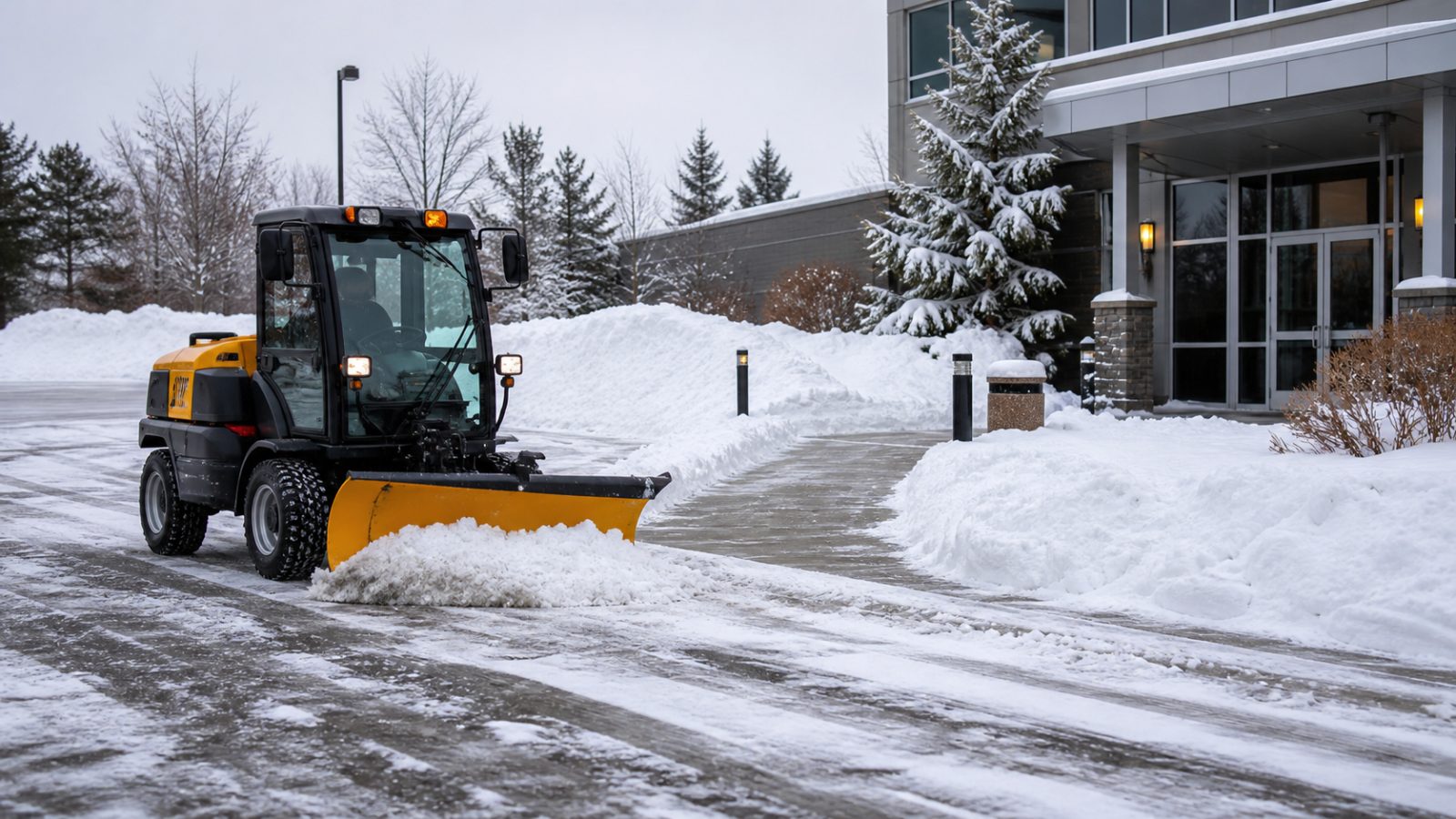
Choose snow storage locations carefully
Snow storage can create problems if it blocks sightlines, doors, drains, parking, signage, or future clearing. Review where snow can be stacked safely and when hauling or relocation may need to be discussed.
- Snow piles away from entrances, drains, signs, and intersections
- Storage areas that do not block parking, loading, or visibility
- Notes for limited lots where hauling may eventually be needed
Mark obstacles and winter risk areas
Curbs, islands, meters, hydrants, landscape edges, drains, low signs, and uneven pavement can disappear under snow. Marking these areas helps reduce avoidable damage and makes winter service more predictable.
- Curbs, islands, hydrants, meters, drains, signs, and landscape edges
- Low spots, drainage freeze-ups, roof drip zones, and compacted snow areas
- Loose items, seasonal furniture, planters, and temporary obstructions
Before the first storm
Winter work gets cleaner when access and hazards are mapped before snow covers the site. Entrances, curbs, islands, drains, storage areas, garbage access, and pedestrian routes should be clear before service starts.
Use that pass to connect the visible condition to timing, access, service frequency, and the kind of exterior maintenance LawnSharks should price.
Set communication expectations before storms
Winter service works best when the property manager, tenants, and contractor understand who communicates, what gets reported, and how urgent access issues are handled. Decide this before heavy weather arrives.
- Primary and backup contacts for storm updates or access issues
- How to report blocked doors, icy walkways, or missed priority zones
- Photos and notes for recurring problem areas after each event
Send wide shots for layout and close photos for the detail areas mentioned in the guide.
Add timing, access, tenant, parking, gate, and seasonal constraints so the estimate reflects the real site.